
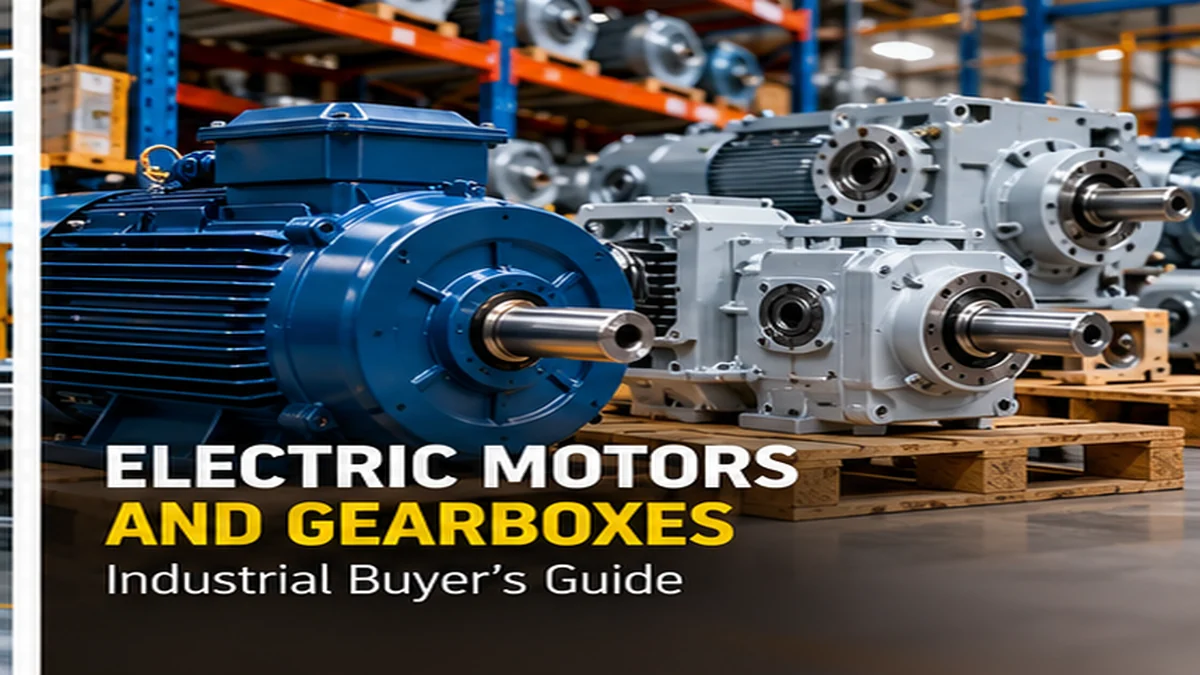
Electric motors and gearboxes form the drive train behind conveyors, pumps, mixers and many other industrial machines. Selecting replacements by appearance or headline power alone can lead to poor fit, unreliable operation or expensive modifications.
Start with the driven equipment and duty
Identify the application, load type, required speed, operating hours, starting frequency and ambient conditions. A conveyor with frequent starts has different requirements from a continuously running centrifugal pump.
The original equipment nameplate, drawings and maintenance history are useful starting points, but should be checked against actual duty.
Motor selection: more than kilowatts
Important motor parameters include rated power, supply voltage, frequency, phase, speed, efficiency, insulation class, enclosure protection, mounting arrangement and starting method. Check compatibility with the site supply and any variable-speed drive.
Where hazardous areas or unusual temperatures apply, additional suitability requirements may govern equipment selection.
Gearbox ratio, torque and service factor
A gearbox changes rotational speed and available torque. Buyers should specify input speed, output speed or ratio, required output torque, mounting arrangement, shaft dimensions and duty cycle.
Gearbox selection must also consider shock loads, thermal capacity, lubrication, orientation and the manufacturer’s service-factor guidance.
Mechanical and electrical compatibility checks
A replacement may have the correct motor rating yet the wrong frame size, shaft height, flange or output shaft. Verify dimensions, couplings, direction of rotation, bearings and the available installation envelope.
On the electrical side, confirm protection settings, cable sizing, starting currents and drive compatibility before commissioning.
How to compare industrial motor and gearbox suppliers
When searching for electric motor suppliers near me, evaluate product traceability, technical support, delivery lead times, warranty conditions and access to spare parts. Request written confirmation of equivalent specifications for proposed substitutions.
An industrial supply company should be able to help buyers clarify required data and avoid ordering a unit that cannot be installed or operated as intended.
Project and procurement checklist
- Motor and gearbox nameplate photos
- Rated power, voltage and speed
- Gear ratio and required output torque
- Mounting and shaft dimensions
- Operating environment and duty cycle
- Quantity, lead time and delivery location
Questions buyers often ask
Can I replace a motor with another motor of the same kW rating?
Not automatically. Voltage, speed, mounting, enclosure, starting characteristics and driven-load requirements must also match.
How do I choose a gearbox ratio?
Use the required output speed and available input speed, then confirm torque and duty suitability with engineering calculations or manufacturer selection guidance.
What details should I send a supplier?
Provide nameplate information, dimensions, application, operating conditions, quantity and required delivery date.
Discuss your requirement with Futuristic 1
For a project-specific discussion, send your scope, drawings, equipment schedule or bill of quantities. Technical selection and commercial proposals should be confirmed against the actual site and project requirements.